




















 INJECTORS




 TURBOS
 FUEL PUMPS
 ACTUATORS
 EGR Coolers
 Contamination Kits
 Accessories Kits
How to Identify Bad Diesel Injectors

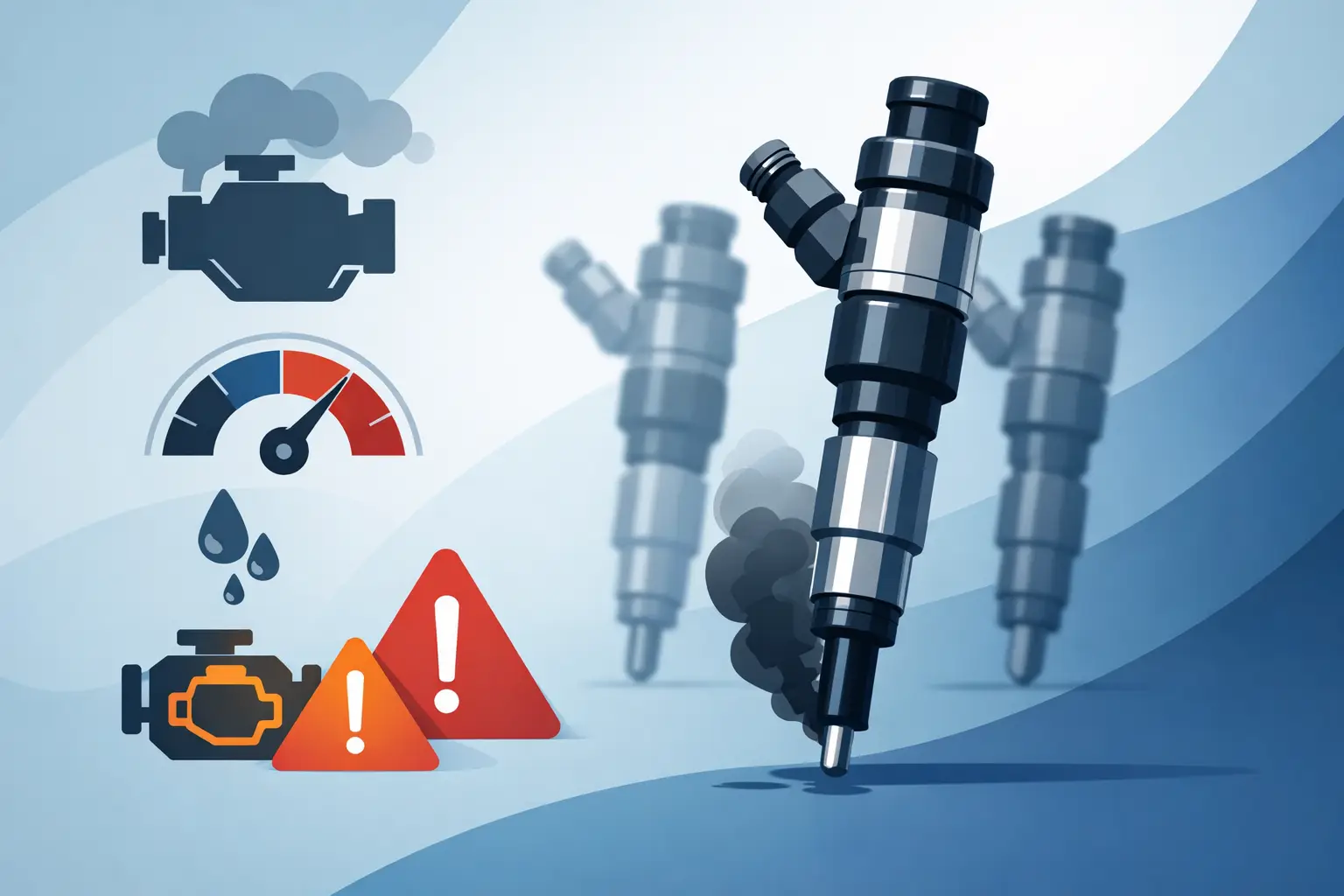
A diesel that starts hard at 6 a.m., hazes white smoke, and stumbles under load is telling you something. If you are trying to figure out how to identify bad diesel injectors, the key is not guessing from one symptom alone. Injector failure shows up as a pattern across startup, idle quality, power delivery, fuel balance, and exhaust behavior.
On a working truck, injectors meter fuel precisely at the right pressure, in the right quantity, and at the right time. When one starts sticking, leaking, overfueling, underfueling, or electrically dropping out, the engine usually gives you several clues before it quits completely. Catching those clues early can save a piston, a turbo, a DPF, or a roadside service call.
How to identify bad diesel injectors by symptom
The first sign is often a change in how the engine runs cold versus hot. A bad injector may cause extended crank time, rough idle for the first few minutes, or a dead miss that smooths out as temperature comes up. That does not automatically mean the injector is bad, because glow plugs, low rail pressure, weak compression, and air in the fuel can create similar complaints. But injectors should stay high on the list when the roughness is tied to one cylinder contribution issue.
Exhaust smoke also matters, but color has to be read carefully. White smoke can point to unburned fuel from poor atomization or low cylinder heat. Black smoke usually suggests overfueling, poor spray pattern, or a nozzle that is not closing cleanly. Blue smoke can show up when fuel wash and oil consumption start overlapping. One smoke event by itself is not a diagnosis. Smoke combined with a knock, surge, or fuel trim issue is more useful.
Power loss under load is another common warning. A truck with a weak injector may feel flat on acceleration, lazy pulling a grade, or uneven during throttle changes. In a fleet setting, drivers often describe it as the truck feeling heavy even when the load has not changed. When injector balance is off, the engine may still run, but it will not run evenly.
Fuel economy can slip before a fault code ever appears. If one injector is overfueling, return rates are excessive, or spray quality is poor, fuel consumption creeps up while performance drops. On electronically controlled systems, the ECM can compensate for a while. That compensation can hide a failing injector until the problem gets worse.
What bad diesel injectors sound and feel like
Experienced techs listen before they tear anything apart. A bad injector can produce a sharp combustion knock, a random miss at idle, or a steady rhythmic imbalance you can feel through the cab or valve cover. On some engines, an injector that is hanging open can create a harsher rattle because the burn event is no longer controlled the way it should be.
The truck may also shake more at idle in gear, especially when accessories load the engine. If vibration changes noticeably when you perform a cylinder cutout test, you are getting closer to the source. This is where good diagnosis separates injector problems from mechanical engine issues. A valve train fault, compression loss, or damaged piston can mimic injector noise, so the sound alone is never enough.
Scan tool data tells the real story
If you want to know how to identify bad diesel injectors with confidence, scan data is where the guesswork starts to disappear. On common rail and electronically controlled diesel systems, injector balance rates, cylinder contribution data, commanded versus actual rail pressure, and misfire information can point you in the right direction fast.
A cylinder with a correction rate far outside the others deserves attention. That said, correction numbers do not always mean the injector itself is the only problem. The ECM is reacting to what it sees. Low compression, poor valve sealing, wiring faults, and fuel supply restrictions can push balance numbers out of range too. Use scan data as evidence, not as a final verdict.
Stored trouble codes can help, but they are not the whole diagnosis. Codes for cylinder contribution, injector circuit faults, rail pressure performance, or excessive fuel return all support an injector investigation. No codes does not mean no injector problem. Mechanical nozzle wear and poor atomization can hurt performance long before the system flags a hard fault.
Shop tests that confirm injector problems
The most useful injector tests depend on the engine platform. A return flow test is one of the best ways to catch an injector with excessive internal leakage. If one unit is returning far more fuel than the others, rail pressure can suffer and hot restart problems become more likely. On high-pressure common rail engines, this test can save a lot of wasted labor.
A cylinder cutout test is also valuable. Disabling injectors one at a time lets you watch RPM drop and engine response. If cutting one cylinder causes little or no change, that cylinder already was not contributing correctly. Then you verify whether the root cause is injector related, mechanical, or electrical.
Resistance testing and harness inspection matter on electronic injectors. Corrosion in connectors, pin fit issues, rubbed-through wiring, and weak solenoids can all look like injector failure. Before replacing expensive parts, confirm power, ground, continuity, and connector condition. Good injectors cannot overcome bad wiring.
For some applications, a bench test is the clearest answer. Flow, leakage, spray pattern, and response can be checked on proper equipment. That is especially important when you are dealing with reman or used parts of unknown quality. A tested and properly programmed injector set gives you a much better shot at fixing the problem once.
Common causes of injector failure
Contamination is near the top of the list. Water, rust, tank debris, and failing pump material can damage precision injector components fast. Once contamination gets into the system, replacing a single injector may not solve the problem. You may be looking at a broader fuel system repair, including lines, rails, pump inspection, filters, and a contamination kit.
Poor fuel quality and lack of filtration shorten injector life too. The tolerances inside modern diesel injectors are tight. It does not take much debris to score internal surfaces or distort spray pattern. Hard starts, smoke, and rough running often follow.
Heat and mileage take their toll as well. Nozzles wear, internals leak, solenoids weaken, and performance gradually falls off. Sometimes the truck still runs well enough that the decline goes unnoticed until towing power drops or fuel mileage gets hard to ignore.
Improper installation can create repeat failures. Incorrect torque, dirty fuel connections, skipped line replacement where required, or failure to program trim codes on certain applications can turn a good injector job into a comeback. That is why platform-specific procedures matter.
When it is not the injector
A smart diagnosis always leaves room for other causes. Low compression, valve damage, turbo issues, restricted fuel supply, aerated fuel, sensor faults, and rail pressure control problems can all imitate bad injector symptoms. If the truck has multiple cylinders acting up, step back and look at system-level faults before condemning every injector.
This is where technicians save customers real money. Replacing injectors without confirming pressure, contamination, and cylinder health can turn one repair into two. The best solution for your diesel truck is the one that fixes the cause, not just the symptom that showed up first.
Repair or replace
If testing confirms failure, the next decision is whether to replace one injector or the full set. It depends on engine hours, mileage, contamination level, and budget. If one injector failed because of age and the rest have similar wear, replacing only one can be a short-term fix. If failure came from isolated electrical issues or one clear outlier in return flow, a single replacement may make sense.
For work trucks and fleet units, uptime usually drives the decision. A truck that cannot afford a second injector event next month may justify a more complete repair now. Quality matters here. Properly tested remanufactured injectors, rebuilt units from a trusted diesel source, or OEM replacements are worth more than bargain parts that create a repeat downtime problem.
One more point that gets overlooked – after replacement, verify the repair. Clear codes, perform the needed programming if the platform requires it, road test under load, and recheck balance data and leaks. A clean install without validation is unfinished work.
If you are tracking rough idle, smoke, power loss, or hard starts, do not wait for the truck to force the issue on the side of the road. Good injector diagnosis starts with the symptoms, gets confirmed with testing, and ends with parts you can trust to go back to work.