



















 INJECTORS




 TURBOS
 FUEL PUMPS
 ACTUATORS
 EGR Coolers
 Contamination Kits
 Accessories Kits
How to Test Diesel Fuel Pump Pressure and Flow

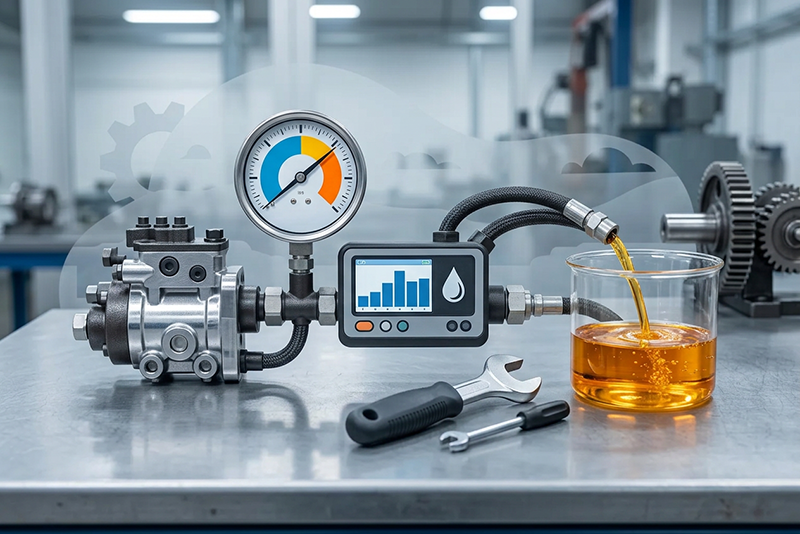
A diesel that cranks too long, falls flat under load, or stalls after a filter change does not automatically need a fuel pump. Before replacing parts, you need numbers. Knowing how to test diesel fuel pump performance lets you separate a weak supply pump from a plugged filter, air leak, failed relay, restricted tank pickup, or a high-pressure fuel pump problem.
Start by identifying which pump you are testing. Many diesel engines use a low-pressure lift pump to move fuel from the tank to the filter and injection system. Common-rail engines also use a high-pressure fuel pump that supplies the rail. These systems are tested differently, and treating them the same can lead to a bad diagnosis or a serious injury.
Safety Comes First Around Diesel Fuel Systems
Low-pressure fuel testing is normally straightforward when you use the correct fittings, a rated gauge, and a clean container. High-pressure common-rail fuel is different. Rail pressure can reach tens of thousands of PSI. Never loosen an injector line, rail fitting, or high-pressure pump line with the engine running. Fuel injected through skin is a medical emergency.
Work with a cold engine when possible. Keep ignition sources away from spilled fuel, wear eye protection, and clean the fuel-system area before disconnecting anything. Dirt introduced on the supply side can damage injectors and high-pressure pumps. If a high-pressure pump has failed internally, metal contamination may travel through the system, turning a pump replacement into a full fuel-system repair.
Confirm the Complaint Before You Test
A good test begins with the symptom and operating conditions. A no-start has a different diagnostic path than low power only when towing or running a loaded commercial truck. Ask whether the engine has hard starts after sitting, loss of power on grades, a fuel-related diagnostic trouble code, abnormal pump noise, or a recent fuel filter replacement.
Check the basics first: fuel level, correct fuel, visible leaks, damaged lines, loose quick-connect fittings, collapsed rubber hoses, and the condition of the fuel filter. A plugged filter can mimic a weak lift pump. So can a restricted tank vent or pickup tube. If the truck recently ran out of fuel, air may still be trapped in the system and proper priming may be all it needs.
Use a scan tool before reaching for a gauge when the truck has electronic fuel control. Record codes and live data, including commanded versus actual rail pressure, fuel pressure readings, and pump command where available. A low-rail-pressure code does not prove the high-pressure pump is bad. The pump may be starved for fuel, the fuel control actuator may be failing, or excessive injector return flow may be bleeding pressure away.
How to Test Diesel Fuel Pump Supply Pressure
The lift pump test usually starts at the manufacturer-approved test port or at a point in the supply line before the high-pressure pump. Install a diesel-rated low-pressure gauge using the correct adapter. Do not force fittings or use improvised connections that can leak or draw air.
Cycle the key and observe pressure if the pump runs during the prime cycle. Then monitor pressure at idle and, when safe, under load or during a commanded pump test with a scan tool. Compare the reading to the engine manufacturer’s specification. There is no universal pressure number. Some systems run relatively low pressure, while others require substantially higher inlet pressure to protect the high-pressure pump.
Pressure that is low at key-on and idle may point to a weak lift pump, low voltage supply, restricted tank pickup, clogged filter, or air entering the suction side. If pressure starts acceptable but drops as RPM and load increase, suspect a restriction or a pump that cannot keep up with demand. A pressure reading that is unusually high can also matter. It may indicate a blocked return path, failed regulator, or incorrect pump installation.
On systems with a fuel-pressure sensor, compare scan-tool data to the mechanical gauge whenever possible. If the gauge shows normal pressure but the scan tool reports an implausible value, the sensor, connector, wiring, or reference circuit may be the actual fault.
Test Fuel Volume, Not Pressure Alone
A pump can make pressure with little or no real fuel volume. That is why a volume test is often the deciding test for a suspected lift pump. Follow the specific service procedure for your engine, route the approved fuel line into a graduated container, and run the pump for the stated time interval. Measure the amount of fuel delivered and compare it with the factory specification.
Use a clean container and never return test fuel to the tank if it may be contaminated. Low volume with low pressure supports a supply problem. Low volume with normal pressure may still reveal a restriction or a pump that only passes the pressure test at no demand. Check the filter and tank-side supply circuit before condemning the pump.
Check Pump Power, Ground, and Command
Do not replace an electric lift pump until you verify it is receiving proper power and ground. A pump that sees low voltage may run weakly, intermittently, or not at all. Backprobe the connector with a digital multimeter while the pump is commanded on or while the engine is cranking. Testing voltage with the circuit unloaded can hide a corroded connection that fails under current draw.
Check voltage drop on both the power and ground sides. Excessive voltage drop points to resistance in the wiring, relay, fuse connection, inertia switch where equipped, or ground path. Inspect connectors for heat damage, spread terminals, moisture, and green corrosion. If voltage and ground are correct but the pump has poor pressure or volume, the pump is a strong suspect.
Some trucks use a fuel pump control module or ECM-controlled duty cycle instead of a simple relay. In those cases, a scan tool and wiring diagram are essential. A no-command condition can be caused by a fault code, module issue, crank signal problem, or safety strategy. Replacing the pump will not correct an electrical command failure.
Testing High-Pressure Pump Performance
The high-pressure pump should be evaluated through scan data and manufacturer-approved procedures, not by opening high-pressure lines. During cranking, watch actual rail pressure against the minimum needed for the engine to start. If rail pressure never reaches the start threshold, determine whether the cause is low supply pressure, excessive injector leak-off, a stuck fuel-control actuator, a failed pressure relief valve, or pump wear.
A return-flow or injector leak-off test is often necessary before condemning a common-rail pump. Worn injectors can return enough fuel to prevent rail pressure from building, creating a no-start that looks exactly like a bad pump. On engines with metering valves, fuel control actuators, or inlet control valves, electrical tests and commanded-actuator tests may identify the failure without replacing the entire pump.
Look closely at the fuel filter and drained fuel for bright metallic debris. Fine glitter or larger metal particles can indicate high-pressure pump damage. Do not install a replacement pump and send the truck back out with contaminated rails, lines, injectors, tank, and filter housing. The correct repair may require a contamination kit or complete fuel-system cleaning, depending on the engine and severity of the failure.
Common Results and What They Usually Mean
If the pump is noisy and supply pressure is low, begin with the filter, fuel quality, tank pickup, and suction leaks. A clogged filter or cracked pickup tube can make a healthy pump sound starved. If pressure is good but volume is below specification, isolate the restriction by testing closer to the tank and then closer to the engine.
If supply pressure and volume are correct but rail pressure remains low, move to high-pressure diagnostics. Check injector return flow, rail-pressure control components, fuel metering controls, and scan-tool data before making a pump decision. If the pump has correct electrical supply but no operation at all, inspect the harness, relay or control module, and pump ground before replacement.
When Replacement Is the Right Call
Replace the pump when testing proves it cannot meet required pressure or volume with clean fuel, unrestricted lines, a new or known-good filter, and verified electrical power. For high-pressure systems, replace the pump only after ruling out injector leak-off and fuel-control faults, unless metal debris clearly confirms internal pump failure.
Match the replacement part to the exact engine application and fuel-system configuration. Commercial diesel systems are not a place for guesswork on fittings, pressure capability, or calibration. American Diesel Parts supplies tested fuel-system components for major diesel platforms when a verified diagnosis calls for replacement.
The best repair is the one that fixes the root cause and protects the rest of the fuel system. Take the extra time to document pressure, volume, voltage, and rail data before ordering parts. Those readings turn a suspected pump failure into a repair you can stand behind.